What commercial kitchen canopy installation involves
The canopy is the capture point of the entire extraction system. If it is too small, hung at the wrong height or short of overhang, no fan will rescue it — fumes simply roll out from under the edge and into the kitchen. So every installation starts with a site survey. We measure the cooking line, record each appliance and its duty, and check the ceiling void, the structure we will be fixing to and the route to outside air.
From that survey we calculate the extract rate using the appliance-by-appliance method set out in DW/172 rather than a rule of thumb, then set the canopy dimensions to suit. That typically means 250–300mm of overhang beyond the appliances at the front and any exposed side, more over combination ovens where door-opening releases a burst of steam, and an underside height of around 2,000–2,100mm from finished floor so chefs can work without obstruction.
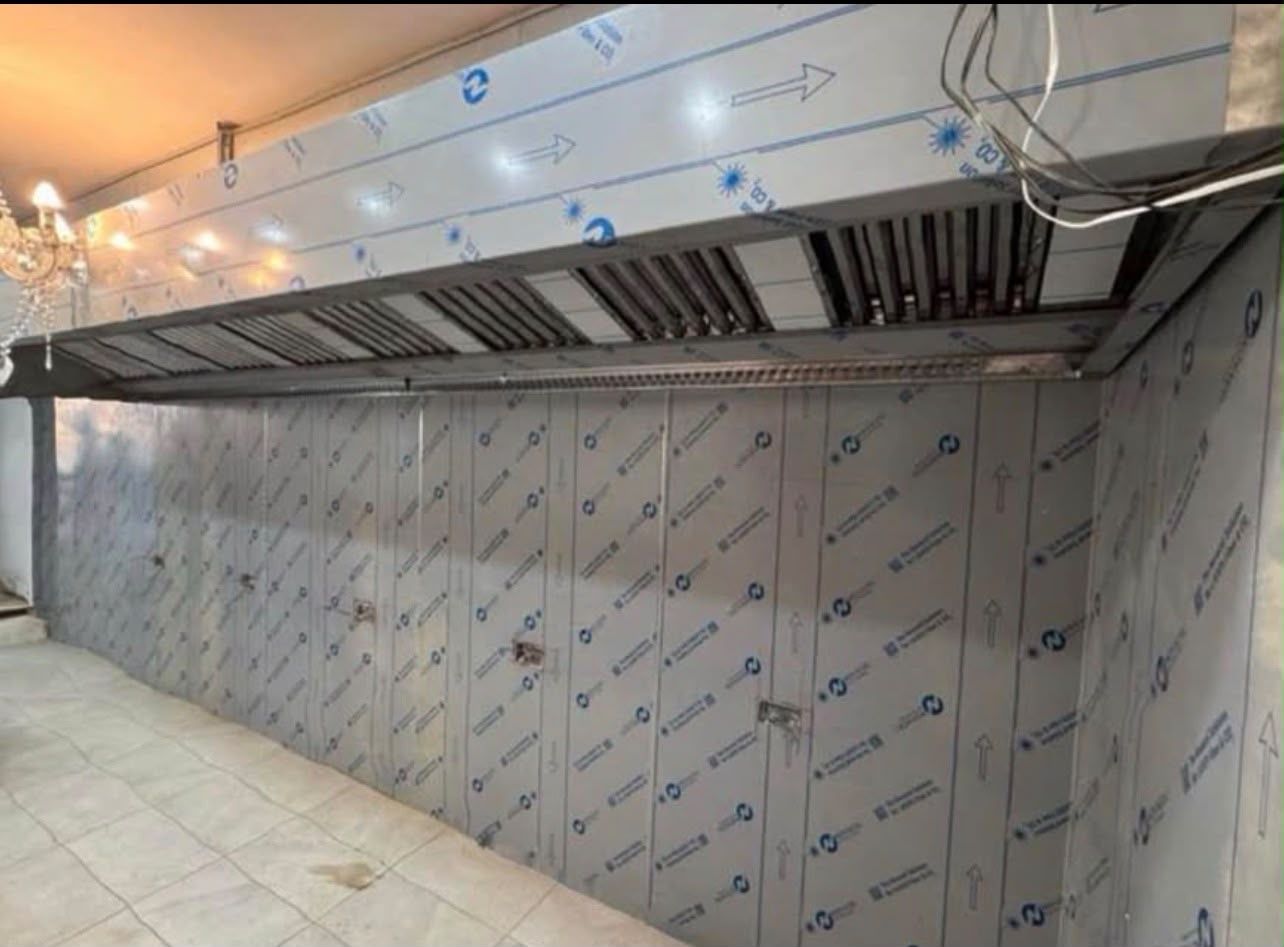
On installation day the canopy arrives in sections sized for your access route. It is lifted into position, hung from the building structure on drop rods or wall brackets rated for the load, then levelled, joined and sealed. We fit the baffle grease filters, drain channels and recessed IP-rated lighting, connect the spigots to the extract ductwork and, where specified, connect a supply-air plenum that returns make-up air at the canopy face.
The job is not finished until it has been commissioned. We measure airflow at the filter face, balance the system and issue a commissioning record showing design figures against measured figures — the document your insurer, landlord and environmental health officer will ask to see.
Wall-mounted, island and condensation canopies
Wall-mounted overhead canopies suit cooklines set against a wall and are the most common type we install. Island canopies serve central cooking suites; because they are exposed on all four sides they need a higher extract rate and a more generous overhang. Low-level and back-shelf canopies work where headroom is limited, sitting close above griddles and fryers.
Condensation canopies are a different product: they go over dishwashers, combination ovens and steam equipment, where the load is moisture rather than grease, and use condensing baffles and a drain instead of grease filters. We will tell you which type each part of your kitchen needs — and where one canopy can sensibly cover more than one job.


