What a commercial kitchen extraction system involves
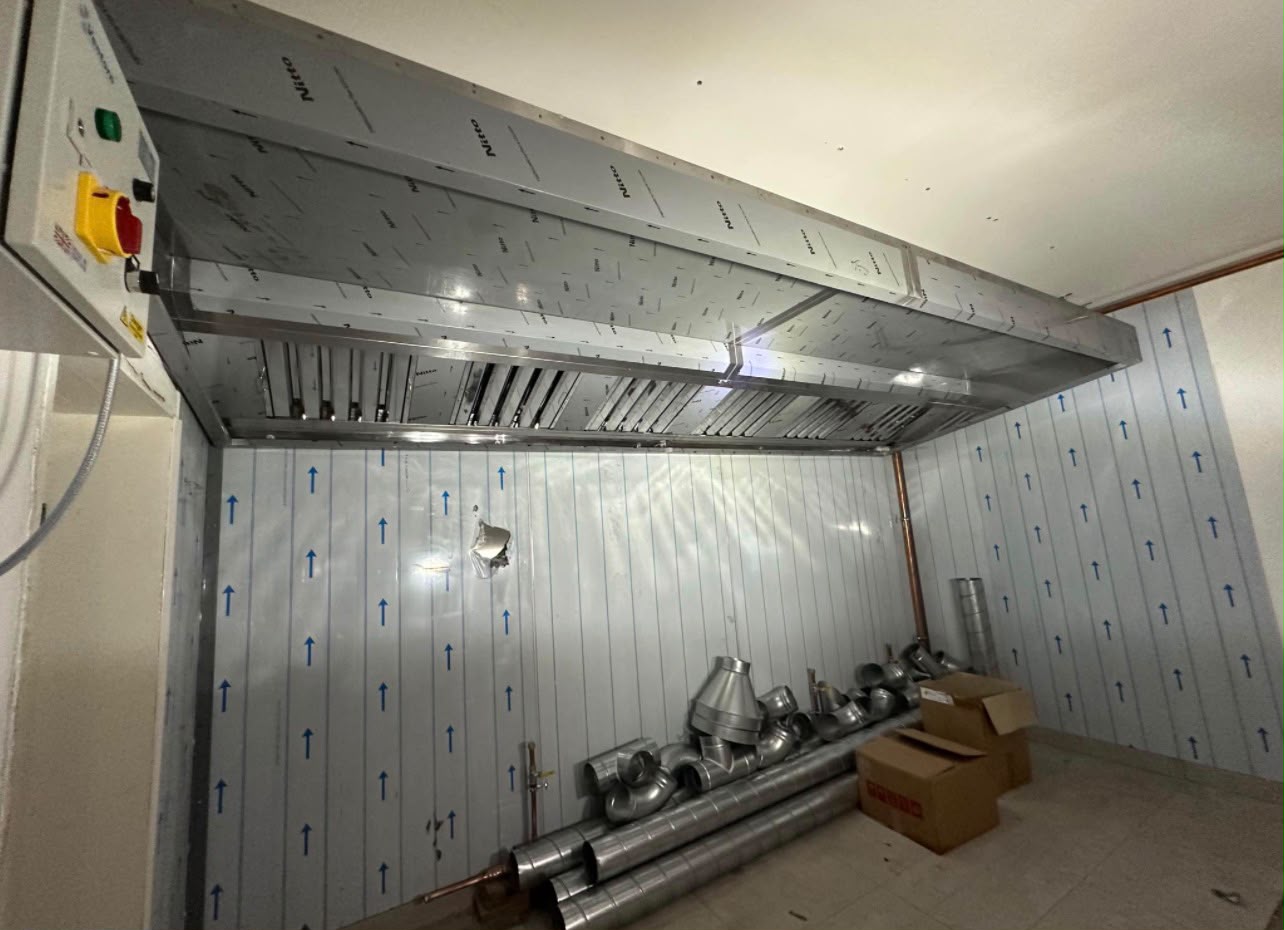
A kitchen extraction system is more than a hood and a fan. It works as a chain: the canopy captures fumes, the filters remove grease, the ductwork carries the air away, the fan provides the pressure to move it, the discharge terminal releases it where it will not cause a nuisance, and a supply system replaces the air that has been removed. One weak link is enough to cause smoke rolling out from under the canopy, doors that are hard to open and a kitchen that is too hot to work in.
Design begins with the cooking load. We calculate the extract volume for each appliance under DW/172, total it, and size the ductwork to keep air velocity within the recommended range — roughly 6 to 9 metres per second in main runs, fast enough to carry contaminants and slow enough to stay quiet. We then work out the resistance of the whole system and select a fan that delivers the required airflow at that pressure, with margin.
Make-up air is the part most often left out. A kitchen that extracts two cubic metres of air every second has to get two cubic metres back from somewhere. DW/172 recommends supplying around 85% of the extract volume mechanically, leaving the remainder to be drawn from adjoining rooms so the kitchen stays under slight negative pressure and cooking smells do not drift into the dining room. We design the supply side alongside the extract and temper the incoming air where needed, so staff are not standing in a cold draught in January.
Where neighbours, planning conditions or a landlord require it, we add odour control — electrostatic precipitation for smoke and grease particulates, activated carbon or UV for odour — together with attenuators and anti-vibration mounts to control noise. We specify these against the EMAQ+ risk assessment that most local authorities now use.
Signs your kitchen extraction system is underperforming
Smoke or steam escaping from the canopy edge. Kitchen temperatures that climb through service. Doors that slam, whistle or need a shoulder to open. Odour complaints from neighbours or from your own dining room. A fan that is noticeably louder than it used to be. Condensation dripping from the canopy.
The cause is usually an imbalance in airflow rather than one failed component, which is why we measure before we recommend anything. If the system can be corrected rather than replaced, see our kitchen extraction system upgrades.