
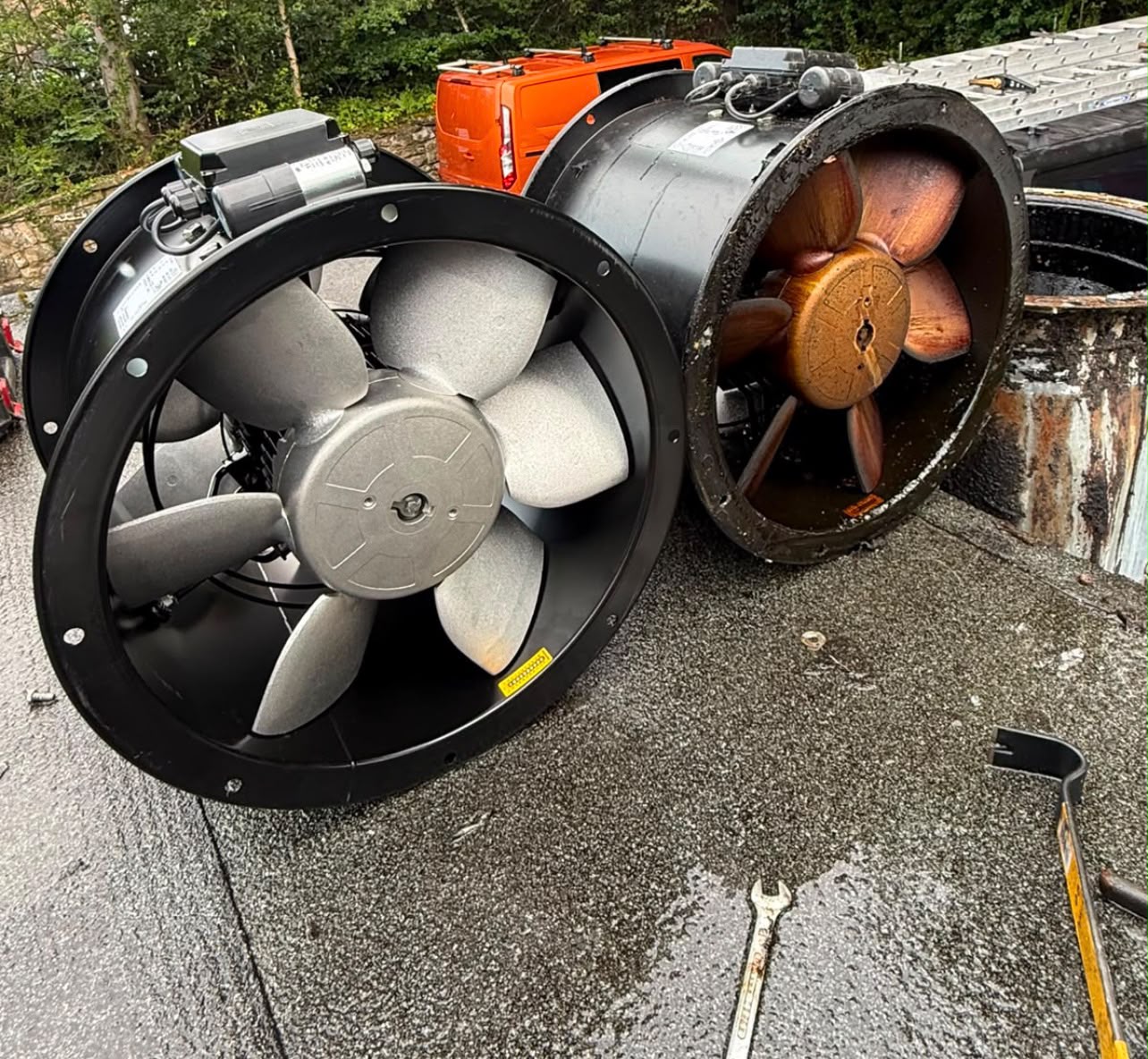
What a commercial extractor fan replacement involves
Replacing a fan is not a matter of lifting one box out and dropping another in. The original fan was selected for a particular duty, but the paperwork has usually been lost and the system has often been altered since. So before choosing a replacement we establish what the system needs now.
We record the make, model and nameplate data of the existing fan, measure the duct sizes and — where the fan still runs — the airflow, assess the resistance of the system, and check the electrical supply, controller, mounting and access, whether that is a roof, a plant room, an external wall or a ceiling void. We then select a replacement that meets or improves on the duty and fits the existing space and connections with the least adaptation.
On the day we isolate and disconnect the old fan and remove it, arranging lifting equipment or a crane for rooftop units ourselves. The new fan goes in on new anti-vibration mounts with new flexible connections; where the spigots differ we fabricate transition pieces to suit the existing ductwork. We reconnect the supply, fit a new controller where needed, and test rotation, running current and airflow. The old unit is taken away and recycled.
A replacement is also an opportunity. Moving from an old belt-driven AC fan to a direct-drive EC fan cuts energy use, removes belts as a maintenance item, reduces noise and adds proper speed control.
When to replace rather than repair a commercial extractor fan
Repeated failures. Parts that are no longer made. A corroded casing or impeller. Noise complaints the existing fan cannot be made to meet. A cooking line that has grown beyond what the fan can serve. Or a motor sitting in the airstream of a kitchen extract system it was never rated for.
If you are unsure which side of the line your fan falls, a repair visit will tell you — and if poor performance has a wider cause, we will point you to a system upgrade instead of selling you a fan that will not fix it.