
What a commercial extractor fan repair involves
When the extract fan stops, the kitchen usually stops with it. Heat and fumes build up within minutes and cooking cannot safely continue. Our engineers attend with test equipment and the common spares, and the aim is always to restore extraction on the first visit.
Diagnosis is methodical. We check the electrical supply and isolator, the controller output, motor winding resistance and insulation, running current against the nameplate rating, bearing condition, impeller condition and balance, belts and pulleys on belt-driven units, and the flexible connections. A fault reported as “the fan is dead” turns out to be a failed speed controller, a tripped overload or a capacitor at least as often as it is the motor.
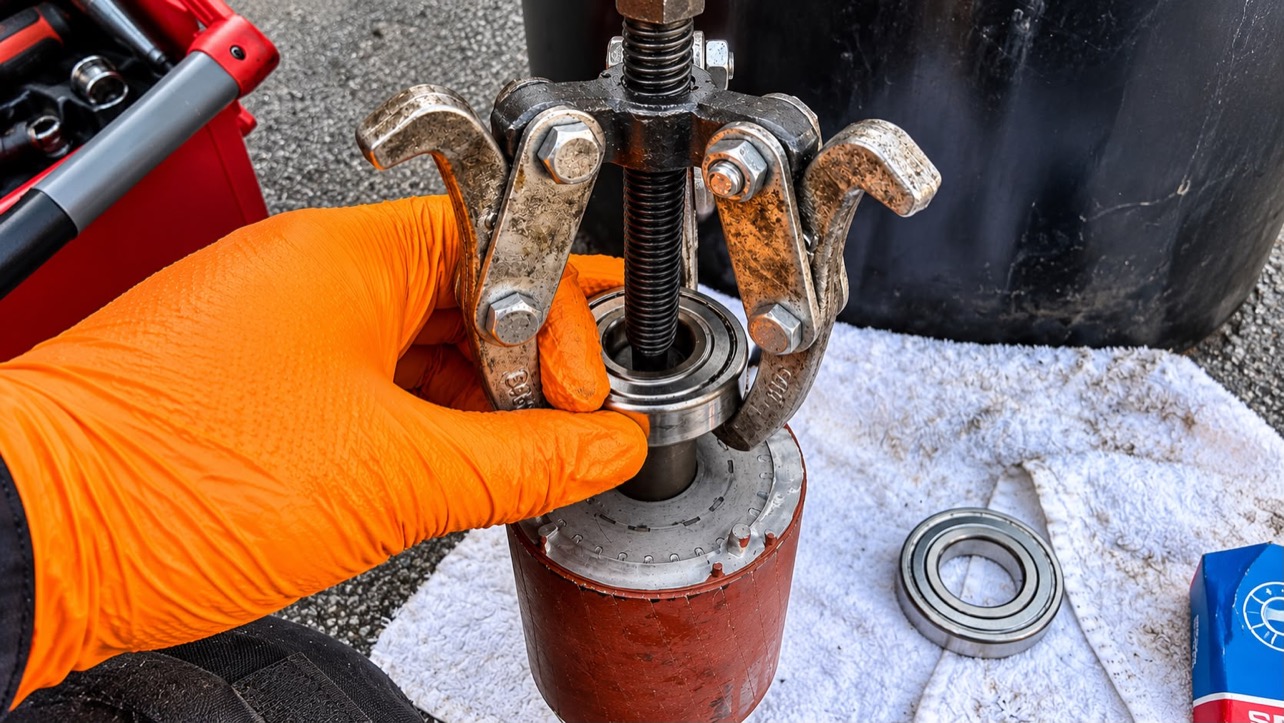
Typical repairs include replacing run capacitors and bearings, fitting new belts and realigning pulleys, replacing speed controllers and inverter drives, rebalancing or replacing impellers, fitting like-for-like replacement motors, and renewing flexible connections and anti-vibration mounts. Afterwards we measure airflow and running current to confirm the fan is back on its duty — not merely that it spins.
Where a fan is beyond economical repair — an obsolete motor, a corroded casing, or simply the wrong fan for the system — we will tell you plainly and quote for a replacement alongside the repair, so you can make the decision with both figures in front of you.
Common commercial extractor fan faults
Fan not running at all: usually supply, isolator, overload, controller or motor failure. Fan running but extracting poorly: slipping belts, a worn impeller, or a three-phase fan running backwards after electrical work — it still moves some air, which is why it goes unnoticed. Excessive noise or vibration: bearings, an out-of-balance impeller or failed mounts.
Fan tripping out: an overloaded or failing motor, or a controller fault. Fan that only works at full speed, or will not change speed: the controller. Intermittent running: loose connections or thermal cut-outs, which point to a motor running too hot.